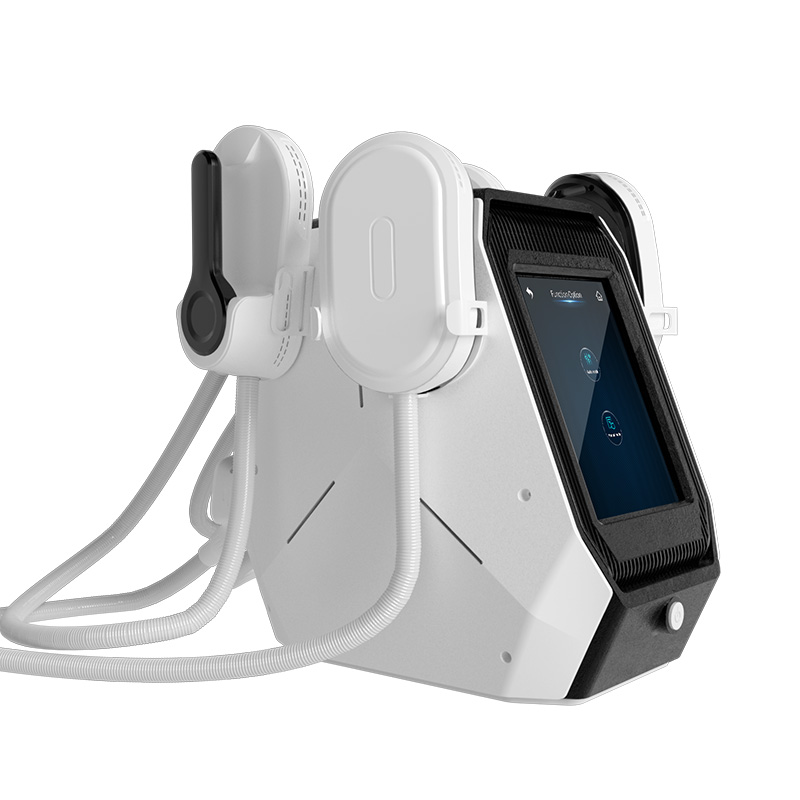
Urinary incontinence is a common problem that affects both men and women. It can happen after childbirth, with aging, or following certain medical procedures. For many people, urine leakage can interfere with everyday activities and reduce their confidence.
As more people look for non-surgical ways to improve pelvic floor health, the Emsella chair has become an increasingly popular treatment option. Using high-intensity focused electromagnetic (HIFEM) technology, it stimulates the pelvic floor muscles through repeated contractions without requiring patients to exercise on their own.
But what exactly is an Emsella chair, how does it work, and who may benefit from this type of treatment? Let’s take a closer look.
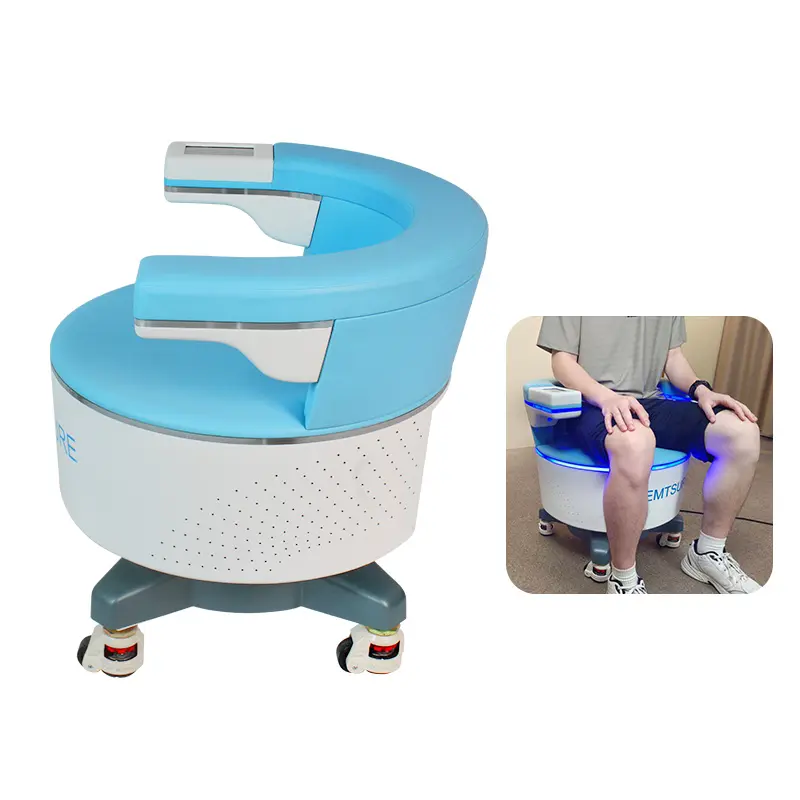
What Is an Emsella Chair?
The Emsella Chair is a non-invasive pelvic floor rehabilitation device built around HIFEM technology — High-Intensity Focused Electromagnetic energy. Visually, it looks a bit like a slightly oversized leather dentist’s chair. A patient sits on it fully clothed, no gown, no gel, no undressing required. Over the next 28 minutes, the chair fires focused electromagnetic pulses upward into the pelvic region, and those pulses cause the pelvic floor muscles to contract hard — the way they would during a really disciplined set of Kegels, only far more intensely than most people can achieve on their own.
During a typical treatment, the patient simply sits on the chair while fully clothed. The electromagnetic energy passes through the pelvic area and activates the pelvic floor muscles. There is no need for surgery, injections, or internal probes.
The treatment is commonly used in clinics and wellness centers as a non-invasive option for people experiencing weakened pelvic floor muscles and urinary leakage.
Today, different types of HIFEM pelvic floor chairs are available on the market. While BTL EMSELLA is a well-known branded system, other manufacturers also offer similar pelvic floor muscle training equipment using electromagnetic technology.
How Does the Emsella Chair Work?
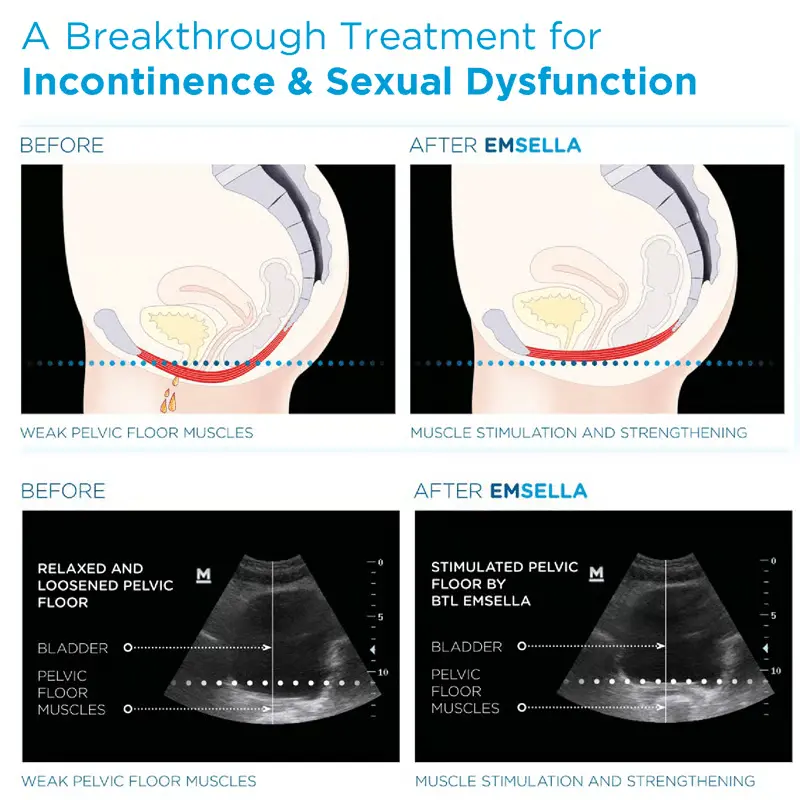
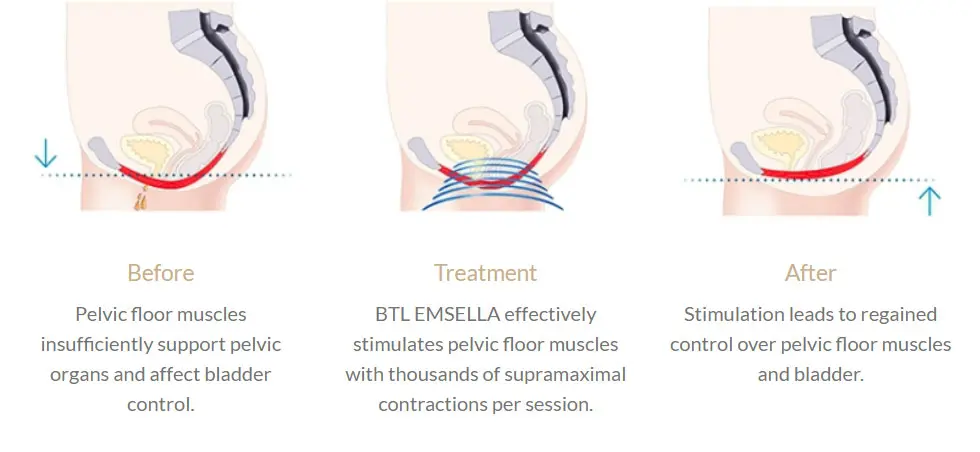
Here is the part most marketing pages skip. The electromagnetic field generated by the chair penetrates through clothing and soft tissue to a depth of roughly 10 centimeters — deep enough to reach the pelvic floor muscles, which sit lower and deeper than most people realize. Once there, the field stimulates the motor neurons that control those muscles, forcing them into repeated, involuntary contractions.
A single 28-minute session produces somewhere around 11,000 to 12,000 supramaximal contractions. For comparison, a motivated patient doing Kegels at home might manage 100 to 150 contractions in a whole day, and even then most people are only engaging a fraction of the muscle fibers. The chair does the equivalent work in under half an hour, and it recruits muscle fibers that voluntary exercise simply cannot reach.
The standard protocol is usually six sessions, booked twice a week. Because the treatment is non-thermal and non-invasive, there is no downtime. Patients can walk straight out of the clinic and back to work, to the gym, or to pick up their kids. They may feel a tingling, pulsing sensation in the pelvic area during the session, but it is not described as painful.
Benefits of Emsella Chair Treatment
One reason the Emsella chair has attracted attention is its non-invasive approach to pelvic floor muscle training. It offers several practical advantages for people who want to improve pelvic muscle strength.
Non-Invasive Treatment
There are no surgical incisions, needles, or internal applicators involved. Patients receive treatment while sitting comfortably on the chair.
No Need to Perform Kegel Exercises
The electromagnetic field stimulates the pelvic floor muscles automatically. This can be helpful for people who have difficulty identifying or contracting the correct muscles during traditional exercises.
Supports Bladder Control
By strengthening the pelvic floor muscles, HIFEM treatment may help reduce urinary leakage associated with weakened pelvic support, particularly stress urinary incontinence.
Convenient Treatment Sessions
A typical session takes approximately 30 minutes. Patients do not need to change clothes or set aside time for a lengthy recovery.
Suitable for Different Age Groups
Pelvic floor weakness can affect adults at different stages of life. Depending on their condition and medical suitability, both younger and older adults may benefit from pelvic floor muscle training.
Comfortable Treatment Experience
Patients remain seated during the session. They may feel rhythmic muscle contractions or a tingling sensation as the energy level increases.
Who Can Benefit from an Emsella?
The shortest answer is: almost anyone whose pelvic floor is weak, but who wants to avoid surgery or who has failed at home Kegel training.
The classic patient is a woman in her 40s to 60s, often postpartum or post-menopause, who leaks when she coughs, laughs, sneezes, or goes for a run. But the device is not limited to that group. It also works well for people with urge incontinence (that sudden “I have to go RIGHT NOW” feeling), for people who have had prolapse and want to support their pelvic floor without surgery, and for athletes — particularly runners and gymnasts — whose pelvic floor has taken a beating over years of impact.
It is worth saying what it does not do. It will not shrink an enlarged prostate, it will not fix a bladder that has developed cancer, and it is not a substitute for seeing a urologist if your incontinence started suddenly or comes with blood, pain, or fever. Emsella is a rehabilitation tool, not a diagnostic one.
Benefits of Emsella Chair for Men and Women
Although pelvic floor weakness is often discussed in relation to women, men also rely on these muscles for bladder control and pelvic support. The potential benefits of pelvic floor training can therefore be relevant to both sexes.
Benefits for Women
Women may experience pelvic floor weakness due to pregnancy, childbirth, aging, or menopause.
Emsella-style HIFEM treatment focuses on stimulating the muscles that support the bladder and pelvic organs. Potential benefits include:
- Helping improve pelvic floor muscle strength after childbirth.
- Supporting better bladder control.
- Helping manage stress urinary incontinence.
- Providing a non-invasive option for pelvic floor muscle training.
- Supporting pelvic muscle conditioning during and after menopause.
For women who find traditional Kegel exercises difficult, electromagnetic stimulation may offer another way to activate the pelvic floor muscles.
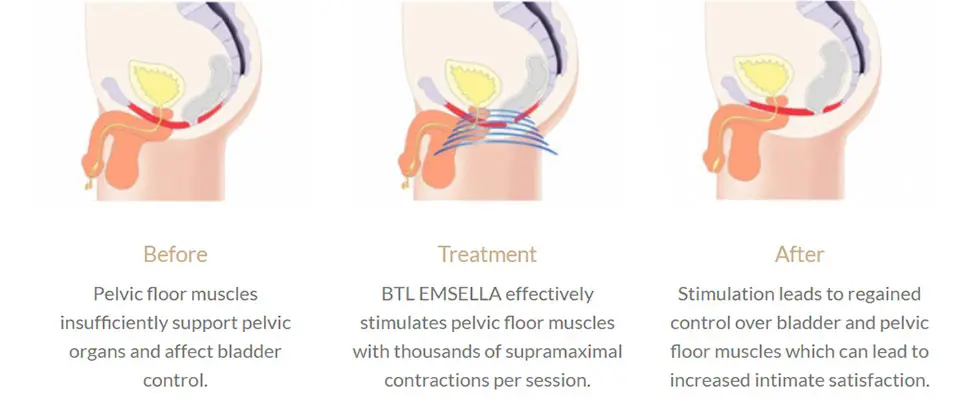
Benefits for Men
Men can also experience urinary incontinence, particularly after prostate surgery or as part of certain age-related changes.
Pelvic floor muscles play an important role in supporting bladder function and controlling urine flow. Strengthening these muscles may help men improve their pelvic muscle control.
Potential benefits of pelvic floor training for men include:
- Supporting pelvic floor muscle strength.
- Helping improve urinary control.
- Supporting rehabilitation after prostate procedures.
- Helping manage post-void dribbling associated with pelvic floor weakness.
For men recovering from prostate surgery, supervised pelvic floor muscle training is an established part of rehabilitation. However, clinical evidence for HIFEM chair treatment in men is still more limited than the research available for women. A medical assessment is important before choosing a treatment approach.
Emsella Chair Near Me
At the end of the day, the Emsella Chair is not a miracle, and anyone selling it as one is going to disappoint their patients. But it is a legitimate, evidence-backed, non-invasive option for a problem — urinary incontinence — that millions of people live with quietly and have almost never been offered a real solution for. It requires no surgery, no needles, no recovery time, and the clinical data on it is among the strongest you will see in this category. For patients who have tried Kegels and failed, and for clinics that want to add a high-demand, low-risk service line, it is well worth a closer look.
If you are looking for professional pelvic floor equipment, you can explore our Emsella Chair and HIFEM Pelvic Floor Therapy Chair to learn more about the available models.
As with any pelvic floor treatment, choosing the right equipment and following an appropriate treatment protocol are important for achieving the best possible results.
References
- Is the High-Intensity Focused Electromagnetic Energy an Effective Treatment for Urinary Incontinence in Women? (2024)
- A Comparative Study on the Effects of High-Intensity Focused Electromagnetic Technology and Electrostimulation for the Treatment of Pelvic Floor Muscles and Urinary Incontinence
- NICE: Urinary Incontinence and Pelvic Organ Prolapse in Women – Management
- American Urological Association: Incontinence After Prostate Treatment Guideline