
Can a laser completely remove a tattoo? The answer is: sometimes, but not always.
Most tattoos can be significantly faded, and many can be removed to the point where they’re barely visible. Black and dark inks respond best. Coloured tattoos, especially those with green, yellow, or fluorescent pigments, are more stubborn. Some ink may always remain visible under certain lighting, particularly if the tattoo was applied deeply or has been previously treated with other methods.
Laser tattoo removal is not a one-treatment process. Most tattoos need several sessions, and some ink colors are more difficult to remove than others.
How Does Laser Tattoo Removal Work?
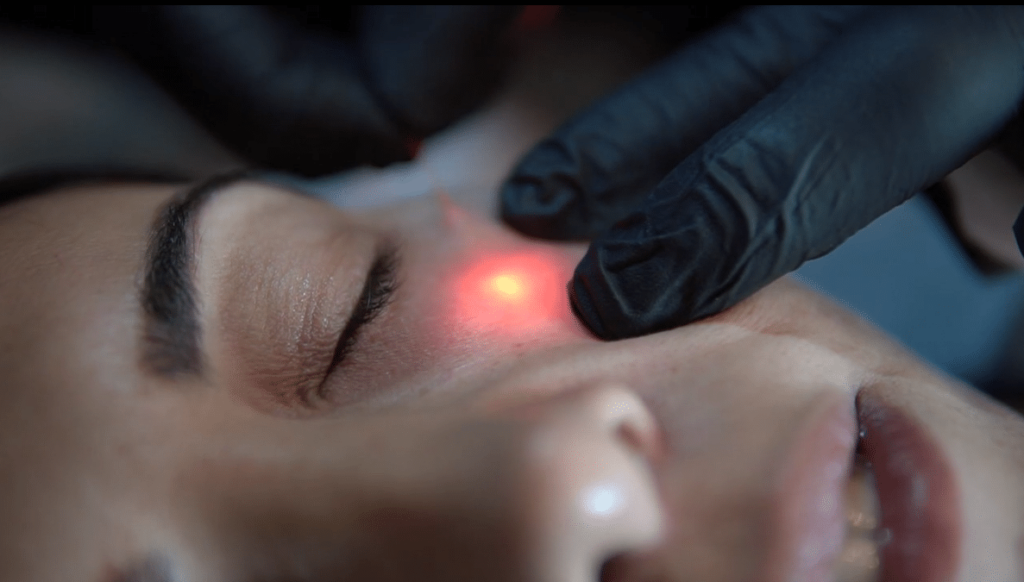
Tattoo ink sits under the skin in particles too large for the body to remove naturally. The laser sends quick flashes of light into the skin; the ink absorbs it, heats up instantly, and shatters into tiny fragments. Over the next few weeks, the body’s immune system flushes those fragments away. Each session breaks up a little more ink, which is why multiple treatments are needed.
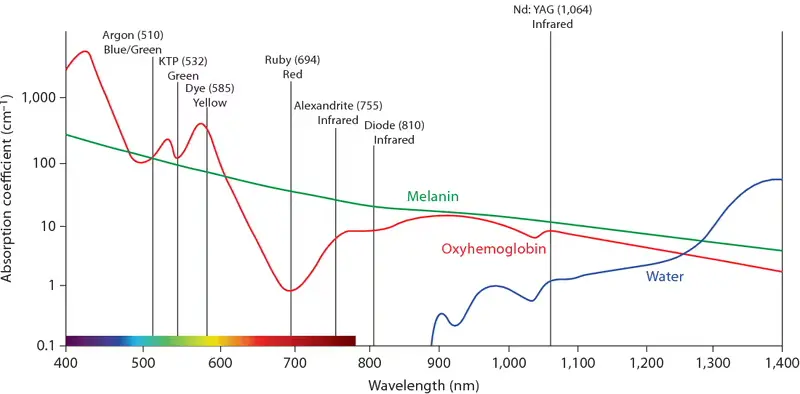
Different ink colours respond to different wavelengths of light. Dark inks like black and blue are the easiest to treat; red and orange need a different setting. Machines that can switch between wavelengths handle a wider range of tattoos. Some newer systems also use a gentler pulse mode that causes less discomfort and fewer side effects.
Can a Laser Remove a Tattoo Completely?
Some tattoos can be removed almost completely, while others may leave behind a small amount of visible pigment or a faint shadow.
There is no guarantee that every tattoo will disappear completely.
The result depends on several factors.
Tattoo Color
Tattoo color is one of the most important factors.
Black and dark blue inks are generally easier to treat because they absorb certain laser wavelengths effectively.
Other colors can be more difficult.
Green, light blue, yellow, and some red inks may require different wavelengths or may take more treatment sessions.
For this reason, a professional tattoo removal system may use more than one wavelength depending on the tattoo color.
Tattoo Age
Older tattoos may sometimes be easier to remove than newer tattoos.
Over time, some of the ink may naturally fade or move deeper within the skin.
However, the age of the tattoo is only one factor. An old tattoo with dense ink can still require multiple treatments.
Tattoo Depth and Ink Density
Professional tattoos are often placed deeper in the skin and may contain a larger amount of ink.
This can make them more difficult to remove than some amateur tattoos.
A tattoo with dense or heavily layered ink may also need more sessions.
Tattoo Size
Larger tattoos usually take longer to treat simply because there is more ink to remove.
The treatment may also need to be divided into different areas, depending on the size of the tattoo and the treatment plan.
Skin Type and Individual Response
Every person’s skin and immune system respond differently.
Two people with similar tattoos may not get exactly the same result or need the same number of sessions.
This is one reason why a consultation and assessment are important before treatment begins.
How Many Sessions Does It Take?
There’s no one-size-fits-all number, but most tattoos require somewhere between 6 and 10 sessions. A small, faded, black tattoo on the shoulder might clear in 3–5 treatments. A large, colourful sleeve could need 12 or more.
Sessions are typically spaced 6–8 weeks apart. This interval gives the lymphatic system time to carry away shattered ink particles and allows the skin to fully recover between treatments. Trying to rush sessions closer together doesn’t speed up results—it increases the risk of side effects.
Each session itself is usually quick. A small tattoo might take 5–15 minutes. A larger piece could take 30–60 minutes. Most clinics apply a topical numbing cream 20–30 minutes before treatment, and many machines have built-in cooling systems to make the process more comfortable. Clients often describe the sensation as similar to a rubber band snapping against the skin.
After treatment, the area may look white or frosted immediately—this is normal and fades within hours. Redness, swelling, and occasional blistering or scabbing are common in the first week. Proper aftercare—keeping the area clean, avoiding sun exposure, and not picking scabs—is essential for good outcomes.

Does Laser Tattoo Removal Hurt?
Laser tattoo removal can be uncomfortable.
Many people describe the feeling as similar to a rubber band snapping against the skin.
The level of discomfort depends on the treatment area, tattoo size, laser settings, and individual pain tolerance.
Cooling systems may be used to improve comfort during treatment.
A trained operator can also adjust the treatment settings based on the patient’s response.
Is Laser Tattoo Removal Safe?
When performed by a trained practitioner with appropriate equipment, laser tattoo removal is low-risk. The most common side effects are temporary: redness, swelling, blistering, and crusting. These typically resolve within one to two weeks.
Changes in skin pigmentation are possible, especially in clients with darker skin tones. Hyperpigmentation (darkening) and hypopigmentation (lightening) can occur, though they are usually temporary. Using the correct wavelength and energy settings for each skin type is critical—this is where having a machine with adjustable parameters and multiple wavelengths really pays off.
Scarring is rare with modern Q-switched lasers but can happen if settings are too aggressive, if aftercare instructions aren’t followed, or if a client has a predisposition to keloid scarring.
Which Laser Is Used for Tattoo Removal?
Different laser systems can be used for tattoo removal.
One common option is the Q-Switched Nd:YAG Laser.
This type of laser delivers short pulses of energy to target tattoo pigment.
Common wavelengths include:
- 1064nm, often used for darker tattoo pigments such as black and dark blue
- 532nm, often used for certain red and warm-colored pigments
Different tattoo colors absorb laser energy differently. This is why wavelength selection is an important part of tattoo removal treatment.
Some professional systems may also offer additional wavelengths or handpieces for different pigment colors and treatment needs.
You can learn more about professional Q Switched Nd:YAG Laser Machines used for tattoo and pigmentation treatments.
Q-Switched Laser vs Picosecond Laser
Both Q-Switched and Picosecond Laser systems are used for tattoo removal.
The main difference is the pulse duration.
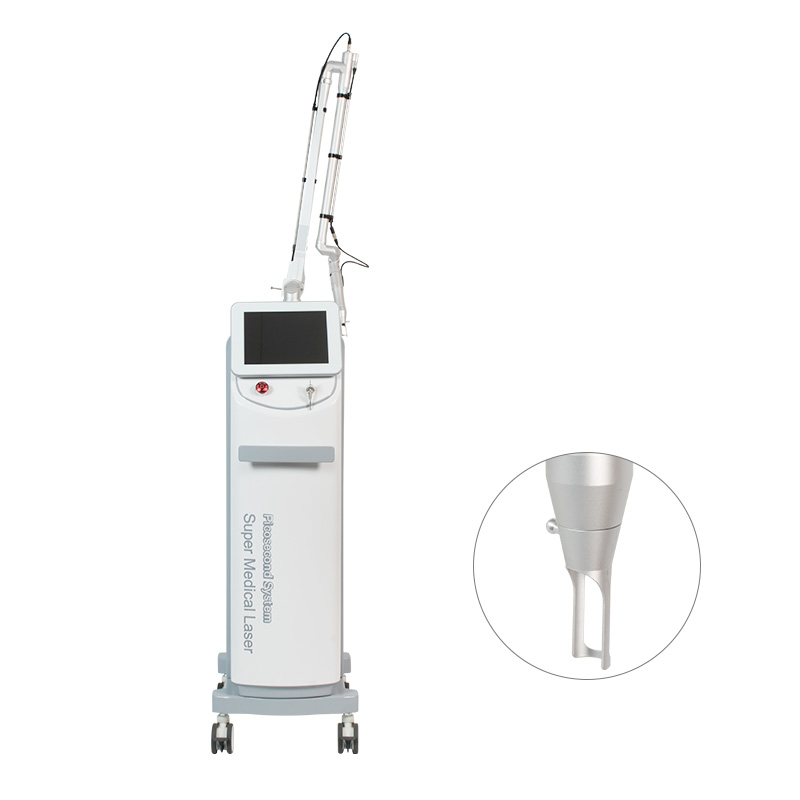
A Q-Switched Laser typically delivers energy in nanoseconds, while a Picosecond Laser uses even shorter pulse durations.
Shorter pulses can help break tattoo pigment into smaller particles.
However, this does not mean that one machine is automatically the best choice for every tattoo.
The final result can depend on the tattoo, wavelength, laser parameters, operator experience, and treatment plan.
When choosing equipment for a clinic, it is important to look at the complete machine configuration instead of focusing on only one specification.

Choosing a Laser Tattoo Removal Machine
If you’re adding tattoo removal to your clinic or salon menu, the equipment you choose will directly shape the results you can deliver. A Q-switched Nd:YAG laser is the standard starting point—it handles the black and dark inks that make up the majority of tattoos, and it’s proven technology with a long safety record.
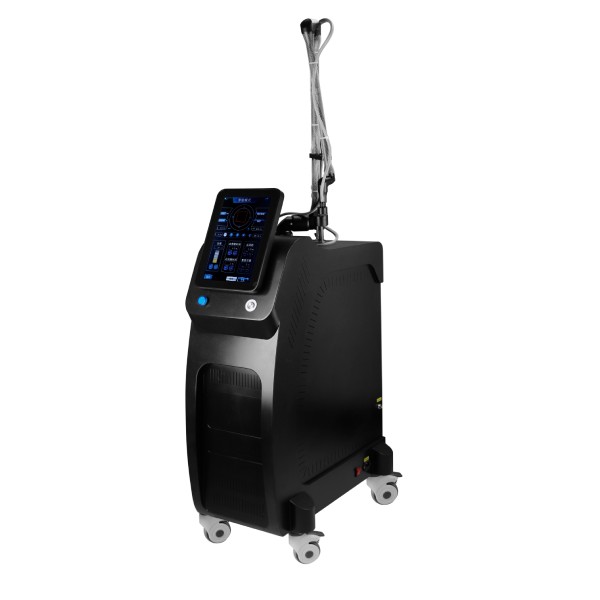
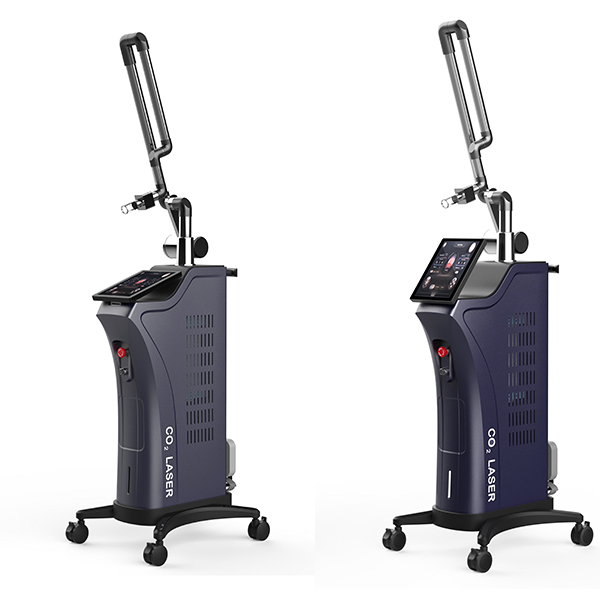
For practices where tattoo removal and pigmentation treatments will be a core service, a dedicated system like the Vertical Q-switched Laser Tattoo Removal Machine For Clinic gives you dual-lamp, dual-bar power with up to 2000mJ of energy. Its PTP mode reduces pain and epidermal damage, and the built-in IPIXEL fractional handpiece extends the machine into skin rejuvenation, so you can offer more services with one device.
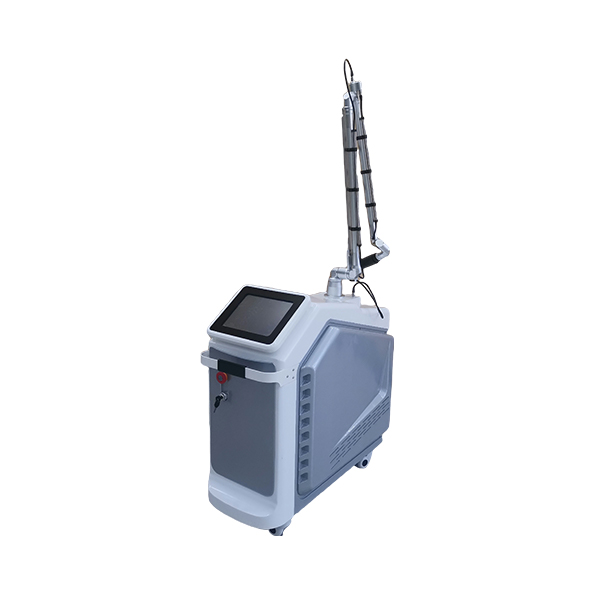
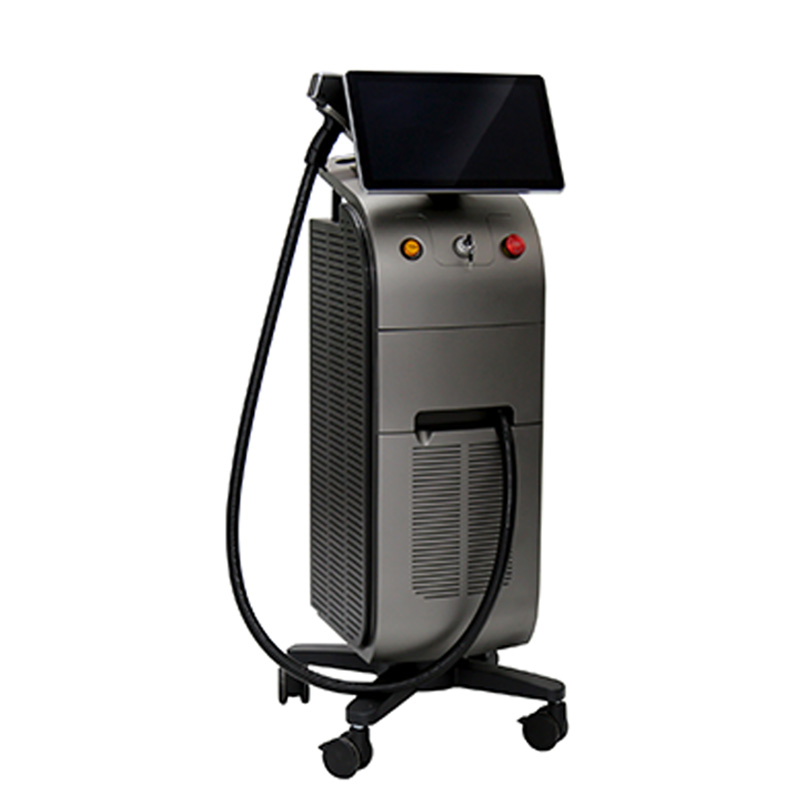
If you’re working with limited space or budget, or if you also want to offer laser hair removal, a Advanced Laser Tattoo Removal Machine for Effective Results combines 755/808/1064nm diode hair removal with 532/1064/1320nm Nd:YAG tattoo removal in a single unit. It’s a practical way to add two high-demand services without buying two machines.
Whichever system you choose, make sure it offers adjustable energy settings, multiple spot sizes, and reliable cooling. Your clients will judge you on results, and results start with the equipment.
Frequently Asked Questions
Can a laser completely remove a tattoo?
Some tattoos can be removed almost completely, while others may leave a small amount of pigment or a faint shadow. The result depends on factors such as tattoo color, ink depth, density, age, skin type, and individual response to treatment.
How long does laser tattoo removal take?
Tattoo removal usually requires multiple sessions with time between treatments. The total treatment period depends on how the tattoo responds and how many sessions are needed.
Which tattoo colors are easiest to remove?
Black and dark blue inks are generally among the easier colors to treat. Other colors, including green, yellow, and some lighter pigments, may be more difficult and may require different wavelengths.
Can an old tattoo be removed?
Older tattoos can often be treated successfully, but age alone does not determine the result. Ink density, color, depth, and tattoo type also matter.
Is laser tattoo removal safe?
Laser tattoo removal is a widely used non-surgical treatment, but it can cause temporary side effects such as redness, swelling, blistering, or changes in pigmentation. Treatment should be performed by a trained professional using appropriate equipment and settings.
Final Thoughts
So, can laser completely remove a tattoo?
In some cases, yes. A tattoo may fade to the point where little or no visible ink remains.
However, complete removal cannot be guaranteed for every tattoo.
The color, depth, density, and age of the tattoo all play a role. The type of laser, wavelength selection, treatment settings, and the patient’s response can also affect the final result.
For clinics and beauty professionals, choosing the right tattoo removal equipment is an important part of providing consistent treatment.
A professional Q-Switched Nd:YAG Laser Machine with suitable wavelengths, stable performance, adjustable settings, and proper technical support can provide a practical solution for tattoo and pigmentation treatments.
If you are looking for a professional tattoo removal machine, contact Lionaura to discuss the available configurations and find a system that fits your clinic or distribution business.